
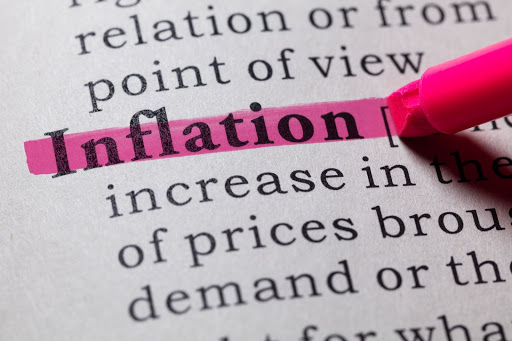
Inflation may rise in the future. If so, should you worry about its effects on your financial plan? If you have a comprehensive financial plan, you might not be as worried as someone who does not.
To understand why let’s briefly discuss inflation and its effects.
Inflation Might Rise in the Near Future
Inflation is a rise in the price of goods and services. Inflation can cause increases in the cost of nearly everything from health care to gas for your car.
Take advantage of Financial Freedom’s free initial consultation. Click here to schedule a time to talk with us.
As a result, inflation erodes the value of your money. The total amount of groceries you can purchase for $100 ten years from now will very likely be less than the total amount of groceries you can buy today for that $100.
Now, many different things affect prices. Inflation isn’t the only factor in rising prices and the consequent erosion of purchasing power. Factors like raw materials, labor costs, and more all contribute to pricing.
In the United States, the Federal Reserve monitors inflation. Its general policy has been to hold inflation at 2 percent per year. Why? Because inflation may devalue money over time.
Economists think that several factors may contribute to inflation rising higher in the near term. First, as the COVID-19 vaccine reigns in the number of new cases, businesses and consumers can start to emerge more from lockdown conditions. The result is likely to be a surging increase in demand, for everything from meals in restaurants to vacations to new cars and houses.
Second, there is likely to be more money in consumers’ and businesses’ hands to fuel the demand. As the pandemic recedes, the labor market is highly likely to improve. Some of the Biden Administration’s programs, such as spending on infrastructure, are aimed at fueling businesses across the country.
Pent-up demand and more money to spend equal conditions in which businesses may well raise their prices. The result could mean more inflation, at least in the near future.
Finally, the Fed has signaled that it might accept slightly more inflation in the future.
The net result is that you may benefit financially if you work with a financial advisor on a customized, tailored financial plan which will consider inflation and its effects on your portfolio.
Inflation and Cash Management
A cornerstone of any comprehensive financial plan is cash management. Your income from all sources must, of course, cover your expenses and leave you with a comfortable cushion of disposable income each month.
Inflation should be accounted for in any cash management plan. If you currently need $6,000 in income every month to live comfortably, you may need more as the years go by to live in the same style, due to the effects of inflation.
If you don’t account for the increase in needed income, your forecasts of what you need to live on in retirement may end up falling short.
Your plans should assume at least 2 percent annual inflation (rising prices) across the board. In other words, if you will retire in 20 years, your expense projection may want to take into account increases of more than 40 percent in costs over that time.
Your projections can be customized based on your individual situations, of course. If you plan to stay in your current home in retirement, for example, and have a fixed-rate mortgage, those costs will not go up (and may vanish, if you pay off your mortgage!).
But how about increases in your property taxes? These are likely in many regions – and in some areas, they may exceed the inflation rate.
Inflation and Your Assets
Inflation and the economic environment may exert many effects on the asset in your portfolio as well – both positive and negative. Let’s briefly survey these.
Cash
If inflation picks up, it may erode the value of any assets held in cash. Frankly, since interest rates on cash accounts are currently very low by historical standards (and have been so for some time), the average 2 percent inflation rate may be outstripping the yearly interest, leading to an effective loss of the purchasing power of principal.
Cash assets nonetheless have a place in your investment and retirement portfolios. They provide a ready source of funds for emergencies. The relative stability of the principal also lends stability to a portfolio and protects against fluctuations in prices of other assets, such as the stock market and real estate.
Bonds
Bonds may also provide general price stability in a portfolio.
Bond interest rates are highly influenced by the direction of the Federal funds rate. The Fed uses this rate as a means of controlling inflation. If it sees conditions that could lead to higher inflation, for example, it could decide to raise interest rates.
Higher interest rates can make money more expensive. Both businesses and consumers may curtail spending plans as a result. The economy may start to shrink. When that starts to occur, the Fed can then lower rates to make the spending climate more favorable.
These changes will affect bonds in your portfolio. Rising interest rates will lead to higher interest rates on bonds. Conversely, they also cause the price of the underlying bonds to drop a bit.
Falling interest rates may cause declines in the interest rates bonds pay, but may also lead to slight upticks in the bond prices.
Equities
Investing in equities may reliably outpace inflation, depending on your unique asset allocation – and that’s why many people choose them for their portfolios.
But equities may also carry more risk than either bonds or cash because they can be a volatile investment. Your financial advisor will work with you to customize a portfolio that provides the benefits of equity appreciation while also attempting to minimize volatility.
Equities can be impacted by inflation in many ways as well. Their fundamental value reflects that of the underlying company, so if more pricing power is good for the company, it can benefit the stock price. But if companies are hurt by inflationary erosion in pricing power, their stock price can also suffer.
Equities can also be affected by interest rates and the economy. In good times, some equities may rise. If the Fed hikes interest rates to control inflation, however, the hike could cause some equities to fall. If the economy turns stagnant or down, equities may also fluctuate.
Contact a Financial Advisor
Inflation may affect your financial plan – but you can minimize your worry by working with a fee-only CERTIFIED FINANCIAL PLANNER™Professional on a comprehensive financial plan that takes your total financial picture, including inflation into account.
At Financial Freedom Fee-Only Wealth Management, we have over 55 years of experience working with individuals, couples, and families. We are a fee-only, fiduciary, wealth management firm dedicated to helping our clients protect, grow, and maximize their wealth.
Contact us today for a complimentary consultation, and find out if we are the right fit for your needs.